Discover the Story Behind Greece’s Emerald Island
If you’re visiting Corfu for the first time, one question usually comes to mind almost immediately:
“Why is everything so green?”
Unlike many Greek islands, where dry hills and rocky landscapes dominate the scenery, Corfu is covered with ancient olive groves, forests, towering cypress trees and fertile valleys. It’s no coincidence that Corfu is often called Greece’s Emerald Island. The answer lies in a unique combination of climate, geography, history and centuries of olive cultivation, creating a landscape unlike anywhere else in Greece.
A Climate That Makes the Difference
The main reason Corfu is so green is surprisingly simple: rain. Situated in the Ionian Sea, on Greece’s western coast, Corfu receives significantly more rainfall than islands in the Aegean Sea such as Mykonos, Santorini or Paros.
During autumn and winter, weather systems moving across the Adriatic Sea bring generous rainfall that nourishes the island’s soil. By the time spring arrives, hillsides burst into life with fresh vegetation, wildflowers and dense forests. Even after the dry Mediterranean summer begins, the island retains much of its greenery thanks to the moisture stored in the ground. This mild climate has helped shape Corfu into one of the most fertile islands in the Mediterranean.
Millions of Olive Trees Tell Corfu’s Story
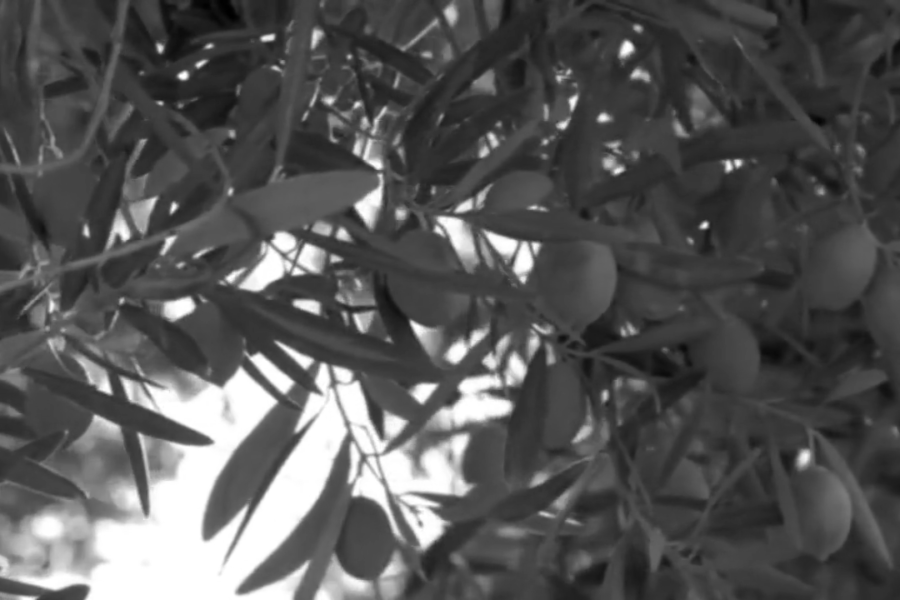
Rain alone cannot explain Corfu’s unique landscape. One of the island’s defining characteristics is its millions of olive trees, many of which are hundreds of years old. Although olives have grown in Corfu since ancient times, it was during the Venetian period (1386–1797) that olive cultivation expanded dramatically. The Venetians encouraged local farmers to plant olive trees because olive oil was one of the region’s most valuable exports. Over several centuries, the landscape transformed into the endless silver-green olive groves visitors admire today. Many of these remarkable trees continue producing olives after more than 300 years.
Cypress Trees Complete the Picture
Look across almost any Corfu landscape and you’ll notice another distinctive feature. Tall Mediterranean cypress trees rise above the olive groves, creating dramatic silhouettes against the blue Ionian Sea. Together, olive and cypress trees form one of the island’s most recognisable landscapes.
Rich Soil Means Rich Nature
Corfu’s fertile land supports an incredible diversity of Mediterranean plants.
- Ancient olive groves
- Cypress forests
- Citrus orchards
- Vineyards
- Oak woodlands
- Wild herbs
- Colourful spring flowers
- Mediterranean shrubs
This biodiversity creates beautiful scenery throughout the year and makes Corfu an excellent destination not only for beach holidays but also for walking, cycling and nature exploration.
Four Different Landscapes on One Island
One of Corfu’s greatest surprises is how much the scenery changes as you travel around the island.
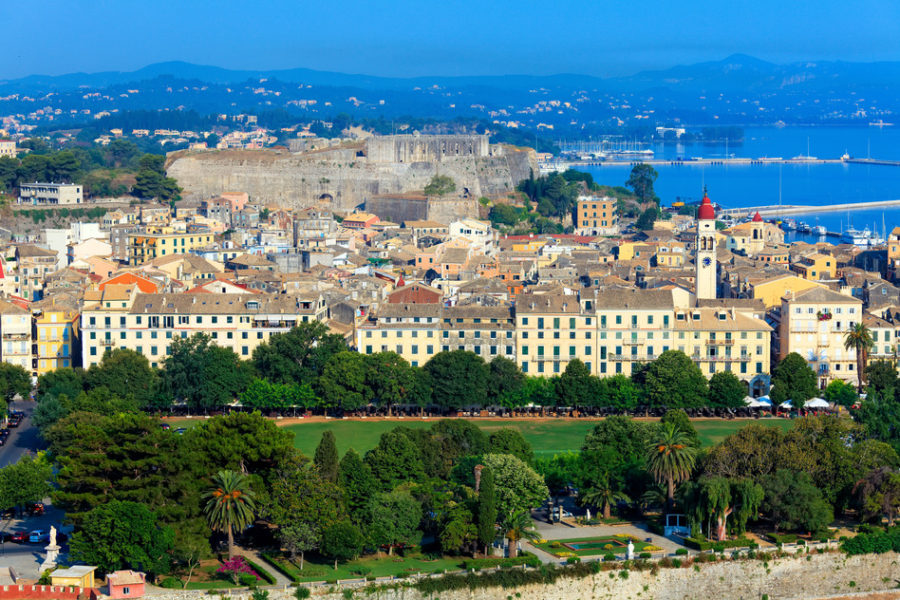
Northeast Corfu – Elegant coastal villages, sheltered bays and olive-covered hills overlooking Albania.
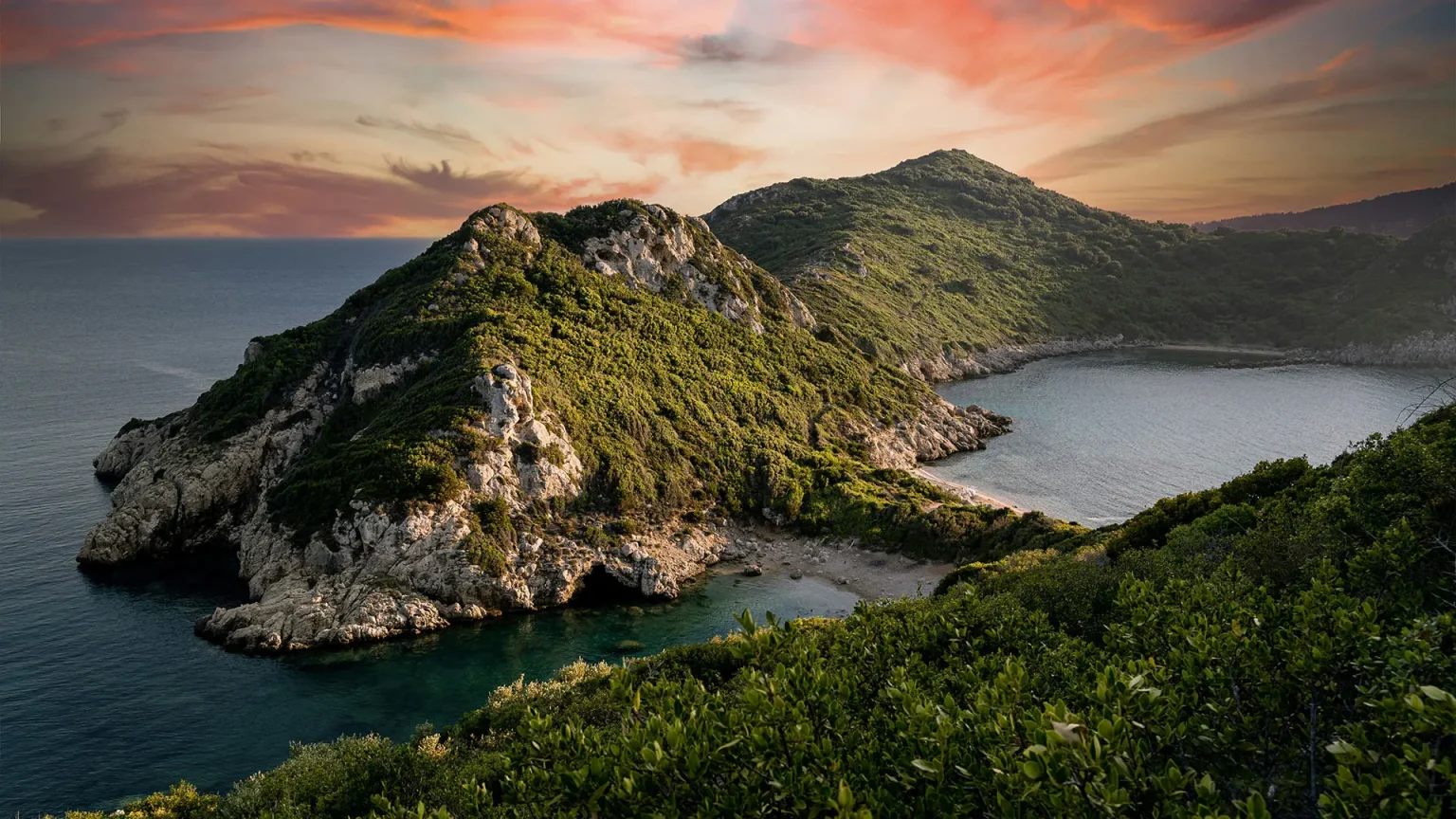
West Coast – Golden sandy beaches, dramatic cliffs and some of Greece’s most spectacular sunsets.
Southwest Corfu – Rolling olive groves meet peaceful beaches and traditional villages. One of its hidden gems is Paramonas.
Northern Corfu – Home to Mount Pantokrator, traditional mountain villages and panoramic views.
Corfu Is Rich in Wildlife
The island’s green landscape supports a remarkable variety of wildlife. Protected wetlands, forests and coastal ecosystems provide habitats for migratory birds, butterflies, wild orchids, native Mediterranean plants and marine wildlife. One of Corfu’s most important natural areas is Lake Korission.
Why Visitors Fall in Love with Corfu
People often arrive expecting crystal-clear waters. They leave talking about the landscape: endless olive groves, centuries-old trees, golden sunsets, peaceful villages, culture and local food.
Experience Corfu’s Green Landscape from Paramonas
One of the best places to experience Corfu’s natural beauty is Paramonas. Located just 200 metres from Paramonas Beach, Mimi & Coco Villas offers three contemporary private villas designed to blend naturally with the surrounding landscape.
Explore Mimi & Coco Villas.